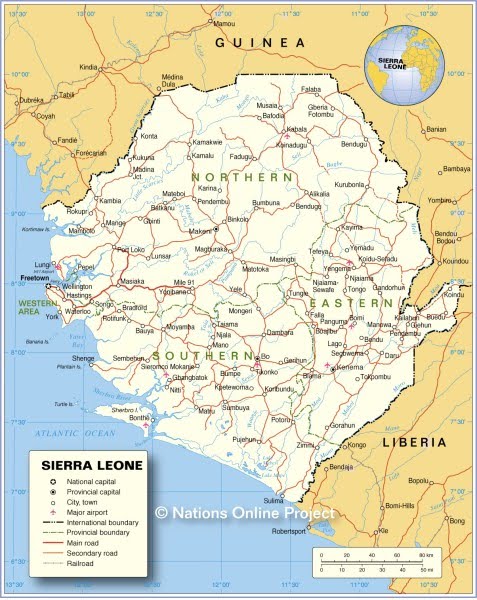
Map of Sierra Leone

Map of Sierra Leone

Thursday, June 23, 2011

Results by Payment?

Girls Education Week in Sierra Leone takes place in October each year. Opportunities are provided for girls to express their concerns about education, and to challenge the government to make sure that improvements take place.

Sierra Leone's education system is divided into four stages; primary education lasting six years, junior secondary education of three years, three years of either senior secondary education or technical vocational education and four years of university or other tertiary education. Since 2004 all primary education and junior secondary school for girls in the northern and eastern areas. Fees were also abolished for the National Primary School Examination (NPSE) that is taken at the end of primary school which led to an increase in enrolments for the exam . The NPSE is designed by the West African Examination Council and has to be passed in order to progress to secondary education. A the end of secondary education students sit WASCE, the West African School Certificate of Education.

In Sierra Leone, an estimated 64 percent of primary school aged children are currently enrolled in school. However, only 54 percent of enrolled girls successfully complete their primary education. Although attendance rates for boys and girls are almost equal at the primary education level, attendance rates for girls in secondary school stands at only 29 percent. There are many reasons for the poor attendance by girls: they may miss school one week per month as a result of not having access to sanitary protection during menstruation, lack of financial resources, early marriage or pregnancy, heavy household responsibilities for girls, lack of appropriate educational resources, primacy placed on boys' education, mothers' heavy workload.

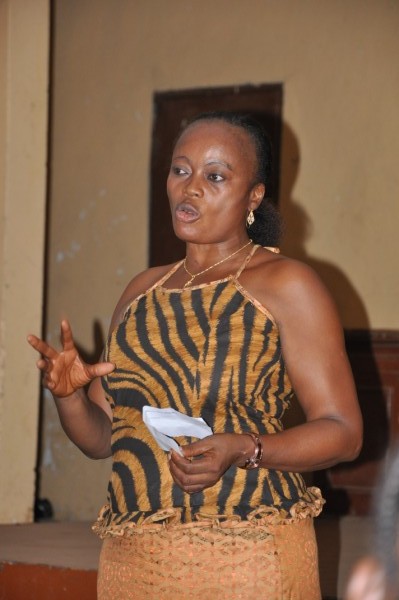
“We need to give a voice to the other girls who can’t be here. Pregnancy and poverty and are some of the biggest problems affecting girls’ education. And when people are aware of the problem, they can start to make changes for the better,” said Salamatu Bangura, 15, from the Methodist High School, which is just over the wall from where we live, during her presentation at the Girls Education Week.

As part of Girls Education Week, Fatmata, from Bo and over 75 girls from around Sierra Leone presented a petition to the Speaker of Parliament and a cross-section of parliamentarians which called for stricter legislation to support girls’ education.

“2015 is around the corner. Every country will have a report card. If you work hard, you will get good grades. If you don’t work hard, then you will fail. We need to start working hard now,” remarked Fatmata to the Speaker of the House of Parliament.

We were sitting on our veranda having our evening meal, after dark, when the gatekeeper came to inform Peter that Isabel wanted to see him. Not knowing any Isabel he was intrigued, and later returned with Isabel’s story. She was to speak at the Independence Celebrations at the National Stadium with the task of thanking the President for what he had done to help children in school. She needed money to get her hair done, so assistance was given. Isabel then came, again in the evening, on the day of the Independence celebration to tell us how it went, but to say she had not had enough money to get her hair done. A few days later she returned again, this time with her hair plaited, so we could see it, and as Peter escorted her to the gate, she asked for money for her school fees. We later discovered that they were not for her actual fees but for the cost of private lessons, offered by a teacher, with the promise that she would be able to sit her WASCE exams privately, and earlier.

Isabel had been sent to Freetown, following the death of her mother, by her father, so that she could continue her education. She was to live with an aunt who would support her.

The nightly visits from Isabel continued and included a story already told in an earlier blog of being evicted from the house she was living in with her aunt.

More recently she appeared and was sick, with stomach problems. Assistance was given to get it sorted out, and within days she was back, in tears saying she had been told she was two months pregnant. Always visiting at night, and often when did not have power or the generator on, it was difficult to note her physique. So she was taken to the clinic, and with just a glance the nurse indicated she was 26 weeks pregnant. This was later confirmed, but with the ante natal tests she was discovered to be HIV+, and to have a number of STIs.

Treatment for HIV is free in Sierra Leone, and Isabel needed to get started on the treatment for herself and the baby immediately, as well as iron to combat anaemia, and treatment for the STIs. Isabel’s father was informed of her pregnancy and he came to collect her, to take her back to the village to have her baby. She returned with a letter of referral from the clinic in Freetown for the local hospital in Port Loko. Hopefully all her treatment will continue, but will she continue her education?

Casual sexual encounters, for money, but not as “a street girl”, are not unknown amongst teenage girls. When the odds are against you to get your school fees, and all the additional expenses where are you to get the money? Education does not just involve fees irrespective of what level you are in. Teachers may demand the students bring in food, or fresh vegetables, suggest that private lessons will ensure good results, envelopes are presented to teachers at the time of examinations, or girls may be asked to meet privately with male teachers. There is also the cost of the school uniform for daily wear, and a special uniform for events such as the school thanksgiving. Some teachers will expect students to buy photocopies of materials and if you don’t have them, then the chance of passing tests and exams is limited. You have to pay for all the exams that you take. The hidden costs of education are multiple. Teachers’ salaries are low, and so they will find creative ways of supplementing their income, often to the detriment of the students.

But many parents are committed to educating their daughters, as is Isabel’s father. Another example is Salena McCaphy who lives in the town of Waterloo to the East of Freedom. She is the mother of six children- five girls and one boy. She lost her husband earlier this year, leaving her to raise her children alone. Surviving on a very modest salary from selling vegetables from her garden, Salena faces financial uncertainty which could force her to put her children to work. In spite of all this, Salena sends all five of her girls to school – something rare here in rural Sierra Leone.
“Investing in our girls’ education will have big rewards for us,” Salena says. “I want my children to be educated so that they won’t have the problems that I have – like financial troubles. I want them to grow up to be happy.”
The oldest of these children, Humu Aruna is 13 years old. She recently passed the National Primary School Exam (NPSE), a required exam for students throughout Sierra Leone. “I want to be a nurse when I grow up, so that I can take care of my mother and grandmother. I’m so proud that I passed the exam, and I made my mother proud too!”
For more pictures on the challenge of girl education in Sierra Leone see: http://www.unicef.org/wcaro/2799.html

Tuesday, May 31, 2011

Fresh Footsteps Across Old Education Boundaries

My name is Jasmine Dingley and I am seventeen years old. I was recently given the opportunity to visit Sierra Leone with my Nan, as she wanted to visit friends and the school she sponsors. I attend a Steiner school, which is an alternative method of education which focuses on educating the whole child, not just the mind. The references within my reflection to ‘main lesson’ and ‘middles,’ are in relation to my experience of school. As a Society and Culture student, I believed that the experience would give me depth to my studies and an appreciation for other cultures, but what I actually gained was much more; I came back having truly gained insight and life experience. The following text is a reflection on my time in Sierra Leone.

I stepped out of the airport into a wave of dry heat. All around, bodies pressed in on me, smiling, laughing and talking in a language I didn’t understand. The lack of regard for personal space, so unlike the norms of western culture, unnerved me and I had to remind myself to refrain from judging a culture on my own values and beliefs. The feeling of truly being a minority, a lone white face in a sea of black, was alien. Over the next ten days, as I began to put aside the cultural mores and norms that form the basis of my understanding of the world, I gained insight into and appreciation for a culture that is so vastly different to anything I have experienced.

The Sierra Leoneans ability to be content and happy with what little they have is something that touched me, and something that I feel has long been lost in western culture. Consumerism and materialism are values so entrenched in our modern day society that the words ‘wealth’ and ‘status’ are essentially the same thing. The happiness that was evident in the face of so much poverty was truly shocking, I couldn’t comprehend that people could be content with so little.

This became all the more evident on our visit to Goderich Waldorf school in Rokel. The first Waldorf school in West Africa, it is little more than three tarpaulin classrooms held up by sticks and rope. With just over ninety students and three teachers, the school is located in a tiny village where the main trades are fishing and stone breaking. As I stood at the main entrance and looked at the tiny structure that supposedly housed almost a hundred children, I couldn’t help comparing it to my idea of a Steiner school, beautiful buildings, open land and shady trees. This became my main learning curve over the course of my trip, to fully understand that everything is relative to the culture in which it is located. To judge another society on the values and norms of your own is not right, although we subconsciously do it. You have to consciously think about it and make the decision to view everything with unbiased eyes, difficult though this may be. So I looked again, and this time saw the children’s faces, how happy and grateful they were to be there at all, how the lack of classrooms, of proper equipment didn’t matter to them, all that did was that they were there and learning. The teachers were happy to be there and to be working, though they received an incredibly low salary by our standards. Amongst all the vast differences I found many similarities. The days were structured in all too familiar ways, main lesson beginning the morning. The children enjoyed morning tea, and then began middles. This little oasis in the centre of poverty amazed me, and truly changed the way I view the world.

It is hard to describe the feeling of entering a completely different culture with little previous knowledge of the place, to be thrown straight in the deep end so to speak. The capabilities Sierra Leoneans must possess in order to live and survive in such a harsh social climate are hard to believe. Little or no water reaches most residential places, and electricity is temperamental at best. These conditions produce a different race of people, not just in nationality but in their incredible outlook on life. The incredible experience I underwent enabled me to get a glimpse of a culture so vastly different to my own. It truly did change the way I view my own culture. It was an amazing journey and I feel privileged to have been given the opportunity to take it.

Saturday, May 21, 2011

Women and Children First - by Deidre Homer

Each time I travel, there is something new to learn about a place and the people, so even though I had heard quite a lot about Sierra Leone, to see and experience it had a great impact.

To have some an insight into some of the work that is been done through the Methodist Church in Sierra Leone and other NGOs was a privilege. I was shocked to hear that about half of the GNP of Sierra Leone comes externally from NGOs and other countries.

I visited 3 health related projects whilst staying with Janice and Peter, as well as seeing 5 out of the 6 churches in the Wilberforce circuit, to which they have recently been attached. The contrast between resources and personnel in Salone and the UK was very evident in the health projects, which is not surprising given the huge health needs of Sierra Leone country. In Salone, a woman has a 1 in 21 lifetime chance of dying due to pregnancy or childbirth compared to 1 in 4700 in the UK (Unicef 2008), and the maternal mortality ratio is 970 per 100,000 births compared to 12 per 100,000 in the UK.

The Aberdeen Womens’ Centre is situated in Aberdeen, an area fairly close to the beach. This charity is supported by Freedom from Fistula Foundation. It provides healthcare for pregnant women, runs a daily children’s clinic for the local community, and is a centre for the correction of vesicovaginal fistulae. This is a condition caused by prolonged labour that results in a connection between the vagina and bladder or bowel, causing faecal and urinary incontinence, and thereby isolation, rejection and stigmatisation of those women who are affected. Women stay at the clinic for a number of weeks whilst being prepared for the surgery and being nursed afterwards, are offered basic literacy instruction and health promotion, as well as opportunities to share fellowship and stories with other women . For more information see http://www.freedomfromfistula.org.uk/fistula_clinic.html .

In the children’s clinic , which I sat in on, there was one doctor, a team of assistants, and over 40 children to be seen that morning. Basic measurements such as height , weight and temperature were taken before each child saw a doctor, and patients were triaged with the most unwell being seen first. At least a couple of children were referred on to a nearby hospital for inpatient treatment and x rays if needed. Tests such as a full blood count and a rapid test for malaria was available at the centre and results were returned as the doctor saw more patients. I left at 13.30 and the doctor still had at least 10 patients left to be seen. The WHO recommended guidelines were used, which included everyone with a fever being tested for malaria. If a child wasn’t too unwell with malaria then a test dose of oral medication would be given at the clinic and then after observation, he or she would continue the treatment at home.

The next project visit was fortuitous as Peter developed a dental problem and the nearest dentist, other the Mercy Ship’s dental clinic, was in the UK next year. Fortunately he was able to access some temporary treatment at the clinic, which had been set up in a compound near to the docks. This again was highly organised, with patients being registered and then waiting to be seen in a large waiting room. As they waited for treatment, mostly dental extractions, and after singing some choruses , 2 staff members spoke of how to look after your teeth. In Sierra Leone there are only 2 dentists per million of the population, compared to 6000 per million in the USA.

The Mercy Ship is staffed by volunteer medical staff drawn from many countries, who spend several weeks working both on the boat and on land. This is the 5th time that the boat has visited Sierra Leone and it will be there for 10 months until November 2011. It is working in partnership with the Aberdeen Women’s Centre. As well as providing free healthcare, it also offers training to local staff to improve long-term health care and build capacity. The ship has 6 operating theatres and 78 beds, as well as land -based eye and dental clinics. Potential patients who might benefit from treatment such as cleft palate repair and removal of cataracts are scouted out ahead of the arrival of the Mercy Ship by clinics set up beforehand. Here is a link to read more of their work in Sierra Leone.http://www.prweb.com/releases/Mercy/Ships/prweb8152864.htm and see also http://www.mercyships.org.uk/ .

On Good Friday I was very pleased to renew my acquaintance with Lillian Lahai, who I met at the last World Assembly of the World Federation of Methodist and Uniting Church Women held in South Korea 5 years ago. Lillian runs a small clinic funded by the Methodist Church, which offers care for pregnant women. It can accommodate up to 6 inpatients as well as seeing outpatients for antenatal care and common ailments. Unfortunately the need for antenatal care and care during and after labour is great in Sierra Leone. With poor maternal health and high infant mortality, the government has gone some way in trying to improve this situation and since April 2010 free medical care for pregnant women, breastfeeding mothers and children under 5 years old has been made available. However, when the government announced this plan they forgot to include or liaise with faith based organizations, who provide a fair proportion of health services. Lillian was delighted that finally, a year later, her clinic will get government funding to provide trained midwives (she is the only trained midwife presently), and funding so that those entitled to free care will no longer be charged, and medication and emergency drugs will be provided. I sat in with Lillian at an antenatal clinic, which began with an education and health promotion session , before the women were seen individually. I especially enjoyed the simile of a woman’s womb being like an overused handbag, that is in danger of splitting open if too many babies have been delivered from it.

The reality of MDG 5 came home to me as we saw a woman with massive swelling of her legs and abdomen. She had been for a scan, but there was so much fluid that we couldn’t hear the baby’s heart beat. Lillian sought advice on management of this patient from medical staff at a local hospital. I was saddened to hear that for whatever reasons, less than 2 weeks later, first the baby and then the mother had died. In the UK both mother and baby would almost certainly be alive now. The reasons why so many mothers die are complex but I only hope that provision of free maternal care will lead to better uptake of antenatal monitoring and hopefully prevent some deaths. However in a country where most folk live in poverty, on less than a dollar a day, problems such as lack of food, difficult access to clean water and the risk of malaria inevitably will continue to affect the health of the nation.

All of the projects visited seek in different ways to empower people to live positively and to make the best of their situation. I was humbled to see how medical staff, often in difficult circumstances, were doing their very best to help their patients, and I greatly admire their ability to keep on going, whatever happens.

I’m very glad to have had the opportunity to visit Sierra Leone and will hold the country and people in my prayers, as they move forward from their celebration of 50 years of independence.

Sunday, March 27, 2011

Remembering for the future...

It is acknowledged that the first gunshots in the Sierra Leonean civil/rebel war were discharged by the Revolutionary United Front at Bomaru in the Kailahun District on March 23rd 1991. To mark the 20th anniversary of this event and to pay respects to the hundreds of thousands who died in the ensuing 12 years, the Inter-Religious Council of Muslims and Christians organised a remembrance service in the national stadium. Peace marches of both faiths began in the early evening from both the east and the west of the city and, following their respective brass bands and banners, converged in the stadium, to provide a gathering of 4-5,000 people to observe a Muslim and a Christian remembrance service liturgy.

The nation had been asked to observe a minute silence at mid-day, but it was difficult to assess how much recognition was being given to such a gesture, and as we sat in the failing light of a stadium which holds 20,000 people, it was quickly evident that seating would not be a problem. First, the motorcycle/taxi riders swept into the stadium en masse, completing laps of the track in an exuberant style, not similar to the bravado they demonstrate every day on Freetown busy streets. These men, in their early 20’s, are of the same age group as those whose expressed deep frustration with the lack of employment and economic opportunities in 1991, and who became key participants in the conflict as it grew and spread from its remote beginnings. Following the motorcyclists were the marchers of both faith groups, dressed in white, dancing their way into the arena, reminding us that in Sierra Leone, being a hijjab wearing woman is no barrier to boisterous celebratory behaviour.

With the nation’s President, Ernest Bai Koroma, a Christian, being called to Nigeria for emergency talks on the worsening situation in Cote d’Ivoire, the State was represented by the Vice President, Al Hadji Sa Sadiqui Samuel Sam-Sumana, a Muslim. The government had declared the remembrance service to be the first official event in the Nation’s 50th Independence Celebration. This overlooked the presidential decree that declared every Saturday morning from mid March to be a time of “pick up plastic”; in an attempt to ensure that Freetown’s litter strewn streets would be relieved of their unsightly mess before 27th April.

The city’s streets are gradually being decorated with bunting, and in fashion shops the green, white and blue of the national flag is making an impact on the style of women’s dresses as we approach the celebrations , while the famous 500 year old Cotton Tree’s trunk is festooned in the same colours.

As we left the stadium late in the night, carpenters and painters were still busy at work, mounting simple exhibition stands in preparation for a trade fair, in which national companies will demonstrate their wares and potential for national development. With few new work opportunities being evident outside of the extractive industries, and with a high and rising cost of living biting hard, astute questions are being asked about the anniversary celebration budget. When a budget of US$50 million was announced late last year, the public response was far from celebratory. Municipal workers facing the demands of Christmas festivities without the payment of their salaries were vociferous in their opposition, whilst the comment within our compound is “imagine what that money could do for schools, clinics and hospitals”. Since then the government has been embattled not just by criticism but suspected fraud scandals within the organizing committee for the celebrations. The political manoeuvring has been swift with dismissals and new appointments being hurriedly made.

Individual Saloneans, including international football super star, Mohamed Kallon, and music and movie star, Jimmy B, have been keen to demonstrate their support for the celebrations, as have commercial enterprises including the mining industry, whose enthusiasm included a donation of US$ 1 million to the activities.

This being Salone, the events calendar remains tentative as independence day is still, after all, a month away. A few weeks ago Peter asked a Sunday morning congregation how many of them could recall the events of 27th April 1961. Less than a handful of people of some 150 people raised their hands, the vast majority were all under forty years of age. Afterwards we heard one elderly woman’s account of that first independence day, in an area not too far from where the civil war had begun in 1991. “We were told to stay indoors” she said, “nobody knew what was going to happen, so for more than two days we stayed close to home”. That is unlikely to be the response next month, as despite the many misgivings people have about the current state of the nation and its direction, Saloneans like a party and a multi faceted celebration of music, sport, jubilation and reverential officialdom is likely to emerge.

Sunday, March 13, 2011

Tableaux of Hope by Laurent and Joe

Going to Sierra Leone was our first experience of Sub-Saharan Africa. We were not too sure what to expect. We knew to not fully trust the media reports on Sierra Leone as they are often based on “doom and gloom”. Civil war, corruption, Aids, terrible social conditions and an economic desert were the pictures we got from the TV and press. Talking to people who used to live in Sierra Leone it was a totally different picture: incredible nature including heavenly beaches, lively and hospitable people, land of opportunities. But often these pictures were also very selective as a "golden year dream" which is the natural reaction from former ex-pats and missionaries. What would we find when going to Sierra Leone? The only reliable certainty was our friends : Janice and Peter. They know us well and managed our expectations wonderfully.

Some say that the first impression is often the right one. Well, arriving in Freetown is a mini adventure in itself. In the middle of the night, you are stunned by the heat. Then the “organised” chaos of the arrivals. Then dragging your luggage - which in our case included a large volume of muesli - to the bus across dust and sand ( not good news for the wheels!). Half the bus is made of white faces who got charged for not too sure what service. There are two ways to see it. The cynical one: "I just got screwed" or the positive one: "I am supporting the local economy". Make your choice! We made ours. After 20 minutes of a dirt road, the bus stopped at the end of the road to the beach. We were offered safety jackets and sent to the boat, two at a time, as the floating pontoon tends to go under water, if there is too much weight on it. The water taxi drives us to Freetown. 45 minutes in total darkness, with only the noise the boat engine and the “clapping” of the boat hitting the sea waves. Very pleasant, as the speed and the fresh sea air made the heat more bearable.


Arriving to Freetown's Alex’s wharf (second stop as advised by Janice) we were reassured to meet the friendly faces of the Clarks. Only two hours late.
This long story is important for Joe and myself as it is our first contact with this part of the world. The heat, the hard working people, the chaos, the colourful life, the lack of infrastructure, the pride were repeated during all our experiences in Sierra Leone.

From the visit to Chimpanzee sanctuary, auntie Hawa 's clinic and training centre, the "touristic high points of Freetown (!)", the HIV literacy project, the Churches, the Krio villages, especially Bathurst and Charlotte, the street markets, the people living on the Methodist compound, leaving the bank with a plastic shopping bag full of bank notes, meeting a priest who struggles with his hierarchy because of his HIV status, all echoed these first hours.

Some other strong pictures stay with us like a human tableau:

Tableau one: The young mother coming to a literacy
course suffering from malnutrition, with a tiny baby empty eyed, hanging on her flat breast, fighting with her “a b c” is a lesson of humility and trust in the future. Why go to learn and read if one doesn't hope? Here it was a lesson of humility and courage for all of us.

Tableau two: the pride of the nurses and the management of the Methodist clinic, the training centre and the Development Department of the church- all taking pride in working for the future of their country and their neighbourhood.

Tableau three: Another strong moment was the aggression of a soldier who swore at us because we took a picture of a statue. Nothing to say we could not do it, but we should have known better. 5 minutes which felt like hours of discussion, to avoid being arrested and moving from being shouted at, to that of a friendly hand shake.

Tableau four: Another strong
moment is meeting Father Prince, an Anglican minister from Bathurst who welcomed us, guided us and offered us the fruits of his garden, for nothing more than the pleasure to chat and welcome strangers in his village.

Tableau five: We should not forget the communal meals with our friends on their veranda, enjoying the grapefruits direct from the tree, looking at vultures, owls and other birds.

Tableau six: meeting with people. Often we noticed that to
get a smile is hard work. But it should not be surprising after the volume of difficulties people have gone through. Once people know who you are and what you want the ice melts quickly. The smile of Mohammed, Adama or Amadu because we ask them for a favour or a small job to be done ... Just the smile.

Despite the past and the obvious struggle to develop a normal social and economic life, people seem to want to manage their future by themselves and avoid the trap of becoming dependent of humanitarian assistance which has destroyed many other developing countries.

For us, as first-time visitors to West Africa it was a worthwhile trip we would have not made without the reassurance of the Clark’s friendship and base in Freetown. It was an eye opener not on misery but on hopes, humility and courage. This trip was a cornerstone in our human and faith journeys.

Tuesday, March 8, 2011

Aiding and Educating for Life

It was quite some time before coming to Sierra Leone, that a friend sent us an article from a British newspaper featuring a school in Freetown. It had been started by Miriam, who as a young woman, in post war Sierra Leone in 2000, recognised the urgent need for access to secondary education for all, and not just those who could afford both the fees and a school uniform. And so, education to aid those who had no means to attend school, started on Miriam’s verandah. The programme is now known as EducAid.

Later on, and still in Edinburgh, we met Rebecca, a psychologist, who had spent some time in Freetown, doing some work with the post conflict Special Court. She had stayed with Miriam, and spoke enthusiastically of the work of EducAid. A year ago, Janice attended a literacy conference, and met Sean, who works at EducAid, and develops materials for the students. More recently a colleague in Edinburgh wrote to say that he had met the chair of the board of EducAid.

So we had heard about EducAid from many different people, and as Janice was preparing a course on curriculum development, a visit to EducAid was well overdue. Situated in a densely populated area of Freetown, called Lumley, it took us time to find it, although we had been sent directions. Housed in an incomplete three-storey concrete building, EducAid demonstrates a unique form of education in Sierra Leone. Unlike other forms of secondary education it is free, and the students do not wear a uniform. Its ethos is that of wholistic education, developing all aspects of what it means to be human. This is done, not through a didactic teacher dominated approach, with passive students, occasionally answering a question or copying from the board, then learning what you have copied for exam purposes. Instead, EducAid has developed hundreds of packs of materials that the students need to work through, at their own pace, following an entrance assessment of what stage they are at. The philosophy of the school is not geared towards passing exams or getting a good job, but to provide the students with critical and analytical skills to gain knowledge, and also to apply that knowledge to other aspects of life.

We arrived at EducAid in time for the teachers’ briefing, which is held every morning at 8am. All the teachers, except for Sean, were Saloneans, and their average age would have been about 25yrs. They were all former students of the school, and had some training as teachers from the school. Their role as teachers is to support, monitor and correct the work the students are doing from their packs. Speaking to Moses, who was in charge of the IT room, he said that he was a founder student at the school, when it started in 2000. He passed his WASSCE (West African Secondary School Certificate of Education), went to Fourah Bay College at the Sierra Leone University and graduated with a degree in engineering. He is now giving back to the school just a little of what it gave him, and for that he receives just a small allowance. There is strong sense of the development of dignity and personal empowerment, and in return, some of the former students feel a responsibility to enable others to have the same opportunity and become teachers. Also present at the briefing were two people working on video recording with students selected from each class, on an issue of concern to the school, that of TB, having recently lost students to the disease. Ensuring equal representation of girls and boys involved was crucial.

After the staff briefing the students came into the school. They had been waiting out in the street for the time for them to come inside. During the night, the 3 floors of the school provide a place to sleep. Of the 600 students, 200 of them are residential. The tables and chairs are neatly stacked up at night, giving floor space for sleeping. There were no signs of mattresses or bedding. Each floor is basically a large open space, and so the girls would sleep on one floor and the boys on the other two. Little space would exist between each sleeping student, but the distance to return home each day was too great. A daily meal is provided daily for all the students.
Once inside the building the students went to their registration groups, and whilst there, were asked to show their merit cards, a form of incentive for better performance and responsibility.

The school has a heavy focus on literacy, and two floors were taken up with literacy activities for the first two hours. The students sat around tables, tightly packed together, but were given the freedom to discuss what they were doing, and share ideas with each other. A number of them had books to read, to find information. We had never seen so many people eager to reading books in Sierra Leone. There was a gentle working hum, and no sign of loud boisterous noise associated with most schools. On the third floor the students were involved in clubs, such as Girls’ Power Club, Belief in Action Club, Art Club, Science Club, Exploration Club, and again packs of material for each of the topics were provided for the students to work on together, with a choices of tasks presented, such as prepare a powerpoint presentation, write a song, prepare a drama. There were texts to read, and questions to consider.

We talked to a number of the students, and all demonstrated self confidence, as well as being able to give their opinions and discuss their ideas. When ready, they will take the BECE exam (Basic Education Certificate Exam) and later the WASSCE. This is not decided by the number of years the students have been at school, but as to whether they have worked through all the units that make up the syllabus to a satisifactory level. EducAid has some of the best results in the whole of the country.

For 4 days in the previous week, we had both been involved in a strategic planning workshop for college staff. One key issue that came out a number of times was the lack of IT accessibility and knowledge by both staff and students. Through the donation of up-to-date computers from a school in London, EducAid has a well equipped IT room with wi fi, where students can do research and work on a variety of projects, including podcasts.

EducAid now has 5 schools in different locations across Sierra Leone. Although heavily dependent on donations of cash and kind in order to ensure that quality education is available to the poor, the characters that the school builds are not dependent on others, as the skills they have developed and the knowledge they have received enhance their personal, social and economic well-being. Being a student at EducAid is demanding, although free, it is not an easy option. If you are not prepared to be accountable for your work, to be challenged, and to think for yourself, then you will not succeed. But with commitment and determination each of the graduating students will make a dynamic and life enhancing contribution to the future of Sierra Leone.

Monday, February 7, 2011

Hominoids Together - Shared Experiences of Captivity and Freedom

Only few miles from the centre of Freetown, the Western Area Forest Reserve, a tropical rain forest covers towering mountains, gives space to a sanctuary, conceived as a response to human oppression and cruelty. A short distance from the forest reserve, savannah covers another part of the same mountain range, and is dotted with small communities, whose heritage is also a testimony to an inglorious piece of human history, the transatlantic slave trade. In being able to visit both communities within a few hours, it is difficult to avoid asking the question, why have we been and continue to be, so stupid? There may be no simple answer but thankfully there are a small number of people involved in the task of addressing our stupid behaviour.

The genesis of the Tacaguma Chimpanzee Sanctuary lies
in the simple act of Bala and Sharmila Amarasekavan rescuing a chimpanzee from captivity some 150 miles north of Freetown. At the time, 1988, it was thought there were only 2,000 chimpanzees in Sierra Leone. That each one of them could live for more than six decades and would become five times as strong as its captor, did not stop people from imagining that a primate which could be imprisoned as a pet!

The life of Charlotte village was conceived in 1807, when, due in no small measure to the Clapham Sect, it became possible for the British navy to intercept foreign slave ships and rescue their cargo. At the time, it was not known that the transatlantic slave trade had involved in excess of ten million people being taken captive along the west coast of Africa, and that history would be forever trying to comprehend such human barbarity.

There are close on one hundred chimpanzees in residence at Tacaguma Chimpanzee Sanctuary, where, since 1995, they have been cared for in their own age-based social groupings. Each chimp is called by its original name, which reflects their Russian, Belgian, French American or British captor’s choice of names. Each of the four groups, of approximately 25 chimps, are housed in the type of habitat that provides for rearing, socialization and independence in preparation for their release, when and where appropriate. The exact location is kept secret, but thanks to the work of the sanctuary, its trans African network of conservation groups, and newly enforced legislation, it is now estimated that there are 5,500 chimpanzees in Sierra Leone.

Krio villages including Charlotte, Gloucester and Bathurst, were established early in the 19th century as vibrant communities consisting of liberated slaves who built schools and introduced small scale farming, and where Quakers and Anglican influence was well represented. The early influence of the Church Missionary Society in governmental decisions, which shaped the ‘Province of Freedom' at the time, continues in the life of St John’s Church, Charlotte, today and where the parish priest, Rev Prince Leigh is keen to share the history of the church and community. Prince, a graduate of the college where we work, stresses how demographic changes, natural disasters and the civil war have reduced the population of the Charlotte village to less than sixty people, one fifth of what it once was. However he speaks with pride on how a threat to the church’s existence was overcome, when the National Power Authority, began to insist that the siting of a high voltage pylon would require the demolition of the church building. The pylon was erected and the church continues to stand but the village still has no electricity!

The enthusiasm and dedication of the sanctuary staff is exemplified by Willie Tucker, who gained an international scholarship and trained in conservation work in East Africa before returning to work with the sanctuary for the last two decades. Like Prince he knows from personal experience the effects of war and the actions of sobels (soldier turned rebels) who are violent and hungry. The physical and psychological damage inflicted upon both the entire Tacugama chimpanzee community and Charlotte villagers is very similar. The similarity of trauma caused to both types of residents underlines more than just the sharing of 98.6% of DNA between humans and chimpanzees. Sanctuary staff are keen to explain that their work in protecting species largely threatened by hunters of ‘cheap bush meat’, represents but a “tip of the iceberg”, in the challenges faced in protecting Sierra Leone’s natural habitat. The educational work of environmental sensitisation conducted by the sanctuary is a vital part of that process. Resilience is also a shared feature of our DNA.

Simple questions about our human stupidity are relatively easy to ask. The answers are rather harder to find. The opportunity to stand on a raised tower in the sanctuary and view the forest and its habitat, or to gaze at the drama of Charlotte waterfall even in the dry season are invitations to contemplate the bigger questions, not just of the past but of future.

We do not need to be located in the tropical rain forests of a country emerging from civil war, to be able to identify our failures and mistakes of the recent past. It is likely that wherever we are we too live in the midst of imbalances of good and evil.

In searching for appropriate wisdom, the thoughts of contemplative masters are helpful. Thomas Merton, in recognising that we are often captive to self acquired attachments, offers his thought on freedom and liberty:

“The mere ability to choose between good and evil is the lowest form of freedom” ... “Freedom is not an equal balance between good and evil choices but in the perfect love and acceptance of what is really good and the perfect hatred and rejection of what is evil.