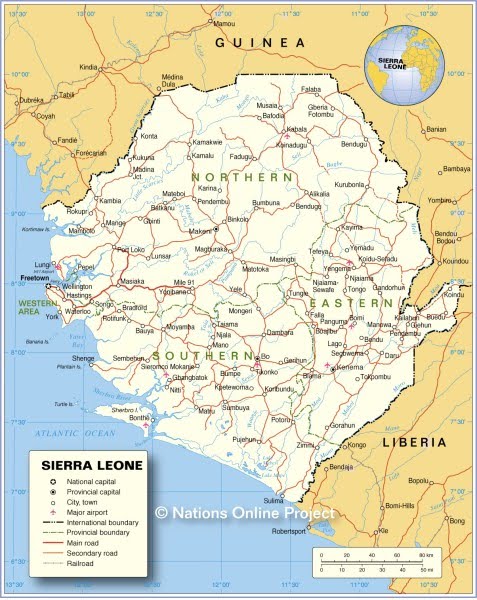
Map of Sierra Leone

Map of Sierra Leone

Friday, October 22, 2010

Matters of Life and Death: A Reflection on Health Care in Segbwema, Kenema District, Sierra Leone

Since my first extended stay in Southern Africa for a year before starting university, there have been several return trips to the West of the continent, both to gain experience with charitable organisations and for holidays. Whether fascination, curiosity or the refreshing change that comes with being in an environment that hustles and bustles to meet the necessities of daily life, there must be something which draws me to the continent. Five years through a medical degree, I have just returned from spending two months at Nixon Memorial Hospital, in Segbwema, a small town in the Eastern Province of Sierra Leone. At the end of my stay, I joined what appears to be an ever growing list of fortunate people, who have experienced Peter and Janice’s hospitality in Freetown. I hope I can add some reflections and comparisons of health in a very rural region of the country to their blog.

There is a place about a mile outside Segbwema simply referred to as ‘the rock’, where I would sometimes walk to on a Sunday afternoon. A scramble up a weathered track, past the derelict remains of houses that used to accommodate visiting doctors, rewards you with fantastic views across the tropical greenness that surrounds the village, with single storey dwellings and the new school scattered on the land in front of you. From the top of the rock, Segbwema is beautiful, serene and uncomplicated. This impression would be in stark contrast to how you felt on a Monday evening after a long day of clinics and ward rounds, where the complexity of the place revealed itself, both in the detail of malnourished children and women who suffered unnecessarily with complications associated with child birth, but also in glimpses of the compassion and often unanticipated humour that compose human nature.

Anyone who enters a role in the healthcare profession does so with the knowledge that, although many of the patients who they treat and care for will recover, there are some who will unfortunately not. The principle is consistent whether in Segbwema or London; what changes is the proportion of patients who recover or die and the frequency at which this occurs. The child mortality rate in Sierra Leone is among the worst in the world, with approximately one child in every five dying before their fifth birthday. During an earlier 5 week paediatric placement in west Wales, thankfully for the parents and children who visited the hospital, I had no exposure to children dying. On the third day of being in Segbwema, I was asked to confirm the death of a toddler. I had seen the child with the doctor thirty minutes earlier. She was malnourished with sparse, brittle hair and had a severe pneumonia. Antibiotics had been started, although there had not been sufficient time for them to have an effect. Walking across the busy ward to the child, I was facing both an emotional challenge and a practical task I had not had to confront before. I placed my stethoscope on her chest and heard nothing. No heart beating, no breath sounds. No reflexes or response to stimulation. Student nurses quickly wrapped the body. The mother came, stood by the child, sighed, and walked away. Then life continued in exactly the same manner as it had the thirty seconds previously. The routine, normality and acceptance of the situation was perhaps the most upsetting aspect. Child and neonatal death is, unfortunately, entrenched and ingrained within daily life in Sierra Leone. Whilst assisting at the antenatal clinic and recording the number and outcomes of a patient’s previous pregnancies, it was not an uncommon situation for the woman in front of me to be pregnant for the fifth or sixth time, with four or five live births and only one or two children alive. Inspired by my short placements on the labour ward and birthing units in the UK, I was keen to increase my experience of obstetric care. Unfortunately, I only observed two births, both of which were still births, one a normal delivery, the other at caesarean. However, another student who was also at the hospital was involved in births where there was a very positive outcome for both mother and child.

I fear that I am presenting too gloomy a picture of hospital life. It is often difficult to know what to express when trying to give an account of your experiences; attempting to get the balance right between describing the realities of the situation without giving the impression of hopelessness would not be true. There were moments of happiness too, both in hospital and village life. One young boy was admitted with a muddled and incomplete story about falling from a tree. He had significant abdominal pain and initially it was suspected he may have ruptured his liver or spleen, associated with a very questionable prognosis. However, a conservative approach was taken and in addition to other medication, he was given a trial of treatment for typhoid fever, which can also present with abdominal pain. There was considerable collective relief when on the fifth day he had recovered and was standing smiling next to his bed. Hope and happiness also came in the form of discharging children from hospital and seeing how malaria treatment and blood transfusion could transform pale, listless, almost lifeless small bodies into active healthy beings ready to continue being children.

The approach to medical diagnosis in the UK can often focus on the minute detail; a raised marker on a blood test or even down to the smallest genetic mistake in human DNA. In Segbwema, without X-rays, blood tests other than a malaria parasite check, running water or electricity for the majority of the time, medicine is practiced with the broadest of brush strokes. Fever is treated as malaria, diarrhoea often as a worm infestation and a cough as a pneumonia or tuberculosis. Temperature is assessed with the palm of a hand on the patient’s forehead and anaemia is checked for solely by looking at the colour of the patient’s hands or conjunctiva of the eyes.

Concerning treatment, the British National Formulary, the book of all licensed medicines in the UK, contains over 700 pages of small typed print of medications, the majority of which a hospital doctor in the UK can prescribe free of charge with little consideration of availability. In Segbwema there was a price list of drugs covering two sides of A4 to select from, often far less depending on what was currently in stock in the hospital pharmacy and the amount of money which the patient had brought with them. The interface between money and health is something which often does not sit comfortably with those in the medical profession. The questions of who, when, and how health infrastructure and treatment is paid for, dominates health systems all over the world. Limitations of funding occur in every health system, including the National Health Service in the UK, where headlines complaining at the lack of availability of the latest cancer treatments are common place. However, in Segbwema the relationship between money and health is crude and far more apparent at the bedside, with money often changing hands as the patient was wheeled into theatre for an operation.

In addition to spending time at a Nixon Hospital, I was fortunate enough to visit both a government run hospital in Kenema, a town west of Segbwema and a Fistula Hospital in Freetown run by the charitable organisation Mercy Ships. The differences in the standard of care and facilities available in these institutions, compared to Segbwema ,was substantial. The quality of clinical care delivered at the Aberdeen Fistula centre is not far from being comparable to a first class hospital in Europe, with well equipped operating theatres, a pharmacy and laboratory on site. Awareness of the significant differences in healthcare provision in different geographical locations and by different agencies is important for two purposes. Firstly it illustrates how a snapshot of experience gained in one small hospital in one location does no more offer a representative picture of the whole country, than the attributes of a single person could be used to describe the whole population. It also demonstrates the extent of the inequalities that exist within the same country, irrespective of the massive inequalities that exist between countries and continents. As health systems are developed, it could be argued that the distributive justice and fairness of the system is equally as important as the service the health system delivers.

Unexpected meetings and interactions were one of the most enjoyable aspects of my stay in Sierra Leone. One evening, we had a knock at the door of our house in the hospital compound and were surprised to be greeted by a very well dressed man who we gradually discovered had been studying for his PhD in Lampeter in Wales and was now running a campaign to be a candidate for the next president of Sierra Leone. One of the themes of his PhD concerning peace in Sierra Leone was that peace is more than the absence of war. In other words it takes a stable economy, social mobility, employment opportunities and social cohesion for a country to be truly peaceful. The parallels to health are evident. The World Health Organisation definition of health includes that it is ‘not merely the absence of disease’. Hospital life often sees the acute tip of the pyramid in the illness and suffering that walks or is carried through its doors, but medicine and healthcare provision cannot be seen in isolation from the wider context of housing, nutrition, education and employment. The integration of the multiple components that shape human life is needed to truly improve health. Although whilst I am writing this, I am putting off the job applications that need to be done for hopefully my first posts as a junior doctor next year, I look forward to being part of a profession that aims to contribute in a small way to enabling health and a profession that will hopefully enable me to return to Sierra Leone.

Robert Burnie, Cardiff, Oct 2010

Sunday, October 17, 2010

Flagging It Up!

In pre independent Papua New Guinea in the early 1970’s, we witnessed the introduction of a competition to establish the country’s first national flag. Peter was working in a remote area of West New Britain, where a British volunteer was teaching, and so he was invited to take a break from building the new classroom, to take an art and craft lesson instead. Topically, Peter chose the designing of the national flag as his theme. Few of the children had ever ventured more than few miles from their rainforest homes, so the geographical appreciation of something as big as even a province, let alone a nation covering a large land mass , multiple islands and over 800 tribes, was an impossible task. Five years later we experienced the lowering of the Australia’s colours and the hoisting up of PNG’s first national flag, in black, red, yellow and resplendent with a bird of paradise, the country’s unique symbol.

On assuming power in Mozambique, following the long civil war, the victorious Frelimo liberation movement simply established their flag as the nation’s own. That it displays an AK47, the weapon of choice for freedom fighters, has not been sufficient to prompt a revision to be made to the nation’s flag during the last 20 years of the country’s peace. Whilst, this year, neighbouring Malawi, decided that after opting to display a rising sun on its flag in 1964, it was time to make the change to a fully risen sun.

In this year alone, 22 African nations will celebrate 50 years of independence. Last week, the continent’s most populace country Nigeria, which has one of the continent’s most un-distinctive flags, was acknowledging it’s freedom from colonialism amidst serious questions as to whether there was more to be reflected upon than celebrated.

As Sierra Leone begins to contemplate its own jubilee celebrations next April, a group of staff at the theological college are working on a project to combine both the nation’s milestone and the 35 years since the college’s inauguration. There is much to be considered, including how to remember the many people from a variety of nations who have contributed to theological education and nation building during that time. Meanwhile the green, white and blue of the Sierra Leonean flag invites a deep reflection on how it has been utilised, functioned and interpreted, at different stages, during the country’s fragile, democratic growth and for too long, a costly civil war.

The green band, at the top, stands for the nation’s agriculture, mountains and natural resources. As we are coming to the end of the rainy season it is indeed a verdant landscape that we witness across the nation. Agricultural produce is far less than it ought to be but a recent story from the Kenema District is more than worthy of flagging up and not just for lovers of chocolate.

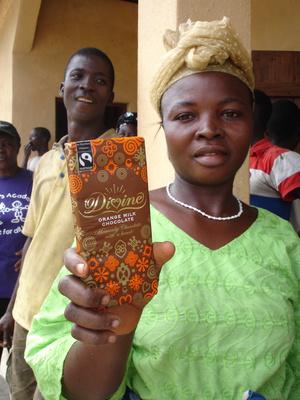
When the war ended, a cocoa group called “Kpeya” which means "give way" in Mende, made a useful alliance with Africa's most successful cocoa cooperative, Kuapa Kokoo (Good Cocoa Farmers' Company) in Ghana. The company is the main source of fair-trade cocoa, in the UK and owns nearly half of Britain's Divine chocolate company, which had a £12.5m turnover last year – a share of which goes straight back to the farmers, including those in Kenema.

The white band at the centre of the flag represents unity and justice. The trial of the former Fisheries Minister concluded this week, with a guilty verdict being handed to Haja Afsatu Kabba, for misappropriating and misusing public funds. She now faces more than US$100,000 in fines or 15 years in prison. The verdict, which many had thought unlikely, given her prominent position among the nation’s political elite, was rightly applauded, as being a positive demonstration of the government’s attempt to eliminate wide-spread corruption wherever it is found.

The blue band, at the bottom, stands for the hope, that Freetown’s natural harbour , the deepest protected port on the whole of the west of Africa, will make a contribution to peace in the world, in the same way that the harbour offered freedom to the tens of thousands people who arrived into it, as a result of the ending of trans Atlantic slavery. Today, as a busy trading port the harbour also features in the needs of vulnerable new mothers and their babies too, as is evident in the story of Agnes and her new born baby girl Sia.

Agnes arrived at the last monthly gathering of the HIV positive group in Wellington, proudly displaying her 4 day old daughter. Both were warmly greeted, as Agnes told the story of how she had already visited The Mercy Ships land based hospital because of Sia’s hair lip. Because of Sia’s inability to suck, Agnes needs to express her breast milk, making feeding a precarious process. Resorting to formula milk alternatives only increases the possibility of life-threatening water born infections. Agnes had been told that an operation was not available at present, but would be so in four months time, when the Mercy Ship vessel will dock in port and begin its 10 months stay, with six surgical theatres on board, to address a whole variety of medical needs.

No doubt there are many more green, white and blue tinged stories in Salone but hopefully this biographical snapshot of the 50 year old flag will add colour to the viewing of your own much older national flag and perhaps the one of the country in which you read this too.

Sunday, October 3, 2010

Past and Present in Mission Partnership

Partnership in mission is the principle reason for our being in Salone, working with the Methodist Church and serving, in particular, in theological education.

Current discussions on the name of the college where we work, the Sierra Leone Theological College and Church Training Centre (SLTC &CTC), have involved the Minister of State for Education, as one of the questions has been of its appropriateness and accuracy – is it the only Theological College in Sierra Leone? If not, then what right has it to use the name Sierra Leone? In answer to the first question there are a number of other theological colleges in the country, representing various positions on the theological spectrum. But in her short speech at the opening service of the first semester of this academic year, Rev Dr Olivia A Wesley pointed out that SLTC is now working in Bo, Moyamba, Kono and Makeni, through its distance learning programme and so it has students throughout the country and therefore can justifiably lay claim to its name.

SLTC & CTC is an ecumenical college, having been established by three historical denominations for the training of their ministers – namely United Methodists, Methodists, and Anglican churches. Since its foundation in 1985, the curriculum offered, and the scholarship achieved, has grown significantly. In addition to degree courses in theology, and Christian education, accreditation has just been received from the University of Sierra Leone for the course in community development. 35 years ago it would have been hard to imagine that students’ numbers would exceed 350 , and that the majority of them would be pursuing studies in administration, information technology, finance and peace studies at certificate and diploma levels.

In 1985 all the students were from the three founding churches and situated in Freetown. Today the majority of the students come from independent African Initiated Churches, Pentecostal Churches and the Roman Catholic Church and some, are Muslims. This is also true of many of the teaching staff on the development, finance, and administration courses. This produces a diverse educational institution, where some courses are taught in a morning programme, but the major attendance is at evening classes, with community worship being an essential part of both programmes.

We are now into the first semester of the new academic year, and like all education institutions the college has experienced the inevitable timetable clashes, confusion of people moving from one course to another, and the uncertainty as to who is to pay the students’ fees. Whilst support is expected from the founding churches, the college relies principally on students’ fees, with additional revenue being derived from late assignments, exam fees, repeat examination fees, graduation fees, library fees etc. The list seems endless.

We are involved in both the morning and evening classes. Peter’s subjects for this semester range from The Gospels, to Christian Leadership and Church Administration, and Applied Theology, whereas Janice has English for Theology, Principles of Teaching, and Pastoral Action on HIV/AIDS. All of these subjects present challenges which need to be researched, as well ensuring that the methods used in the classroom do not conform to “I speak, you listen!!” In addition there are B.Th. dissertations and long essays to be supervised, as well as marking of these and other assignments. However, staff meetings are a rarity and almost all key decisions on functional matters (policy is controlled by the college’s board) are taken by a few key people and leaked rather than communicated.

Last semester we were involved in the preparation of materials for Distance Learning, which pursues the principals of education by extension, for the benefit of those living in isolated urban and rural communities. It is both an important aspect of what the college is able to offer as well as a response to the growing number of students seeking to pursue study, whilst also having the security of work in aspects of nation building, at a distance from major urban conurbations.

Within the student population based Freetown there is a reasonable balance of males and females, who vary in age but have in common a keen sense of wanting to learn, understand, assimilate and apply what they are presented with. Their academic backgrounds vary, some with the equivalent of a West African A levels, whereas others already have a degree in another discipline. Very few are full time students, in that they are not in employment, whereas many more are already involved in full time ministry or others working in a variety of occupations. Our academic colleagues are all Saloneans, but there are only two women academic staff members, in addition to the principal. A team of administrative staff and another, offering logistical services (including carrying water up three flights of stairs), provide invaluable support to the various strands of college life. Whilst English is the ‘medium of instruction’, Krio is the lingua franca, for all sectors of the community. For both staff and students football is the common topic of exchange, regardless of the day of the week, with much more being known about the English Premier League than local football.

The college library has a collection of 30,000 books but as yet is lacking a computerised classification system. Reading is a habit that needs much encouragement, and acknowledgement has to be given to the fact that many of the students may not have electricity in their homes, that they have very limited space to work in, and that with the close proximity of housing, finding peace and quiet to study is not easy, where the expectation is that people will socialise in preference to reading a book alone.

Early on in each semester a staff gathering is held which all staff full and part-time are expected to attend, although all are present, the content focuses more on the academic aspect of what is often referred to as the college family. The meeting this semester was a refresher course on learner centred teaching and classroom management, unfortunately with little demonstration of the former from two well respected women in the Ministry of Education.

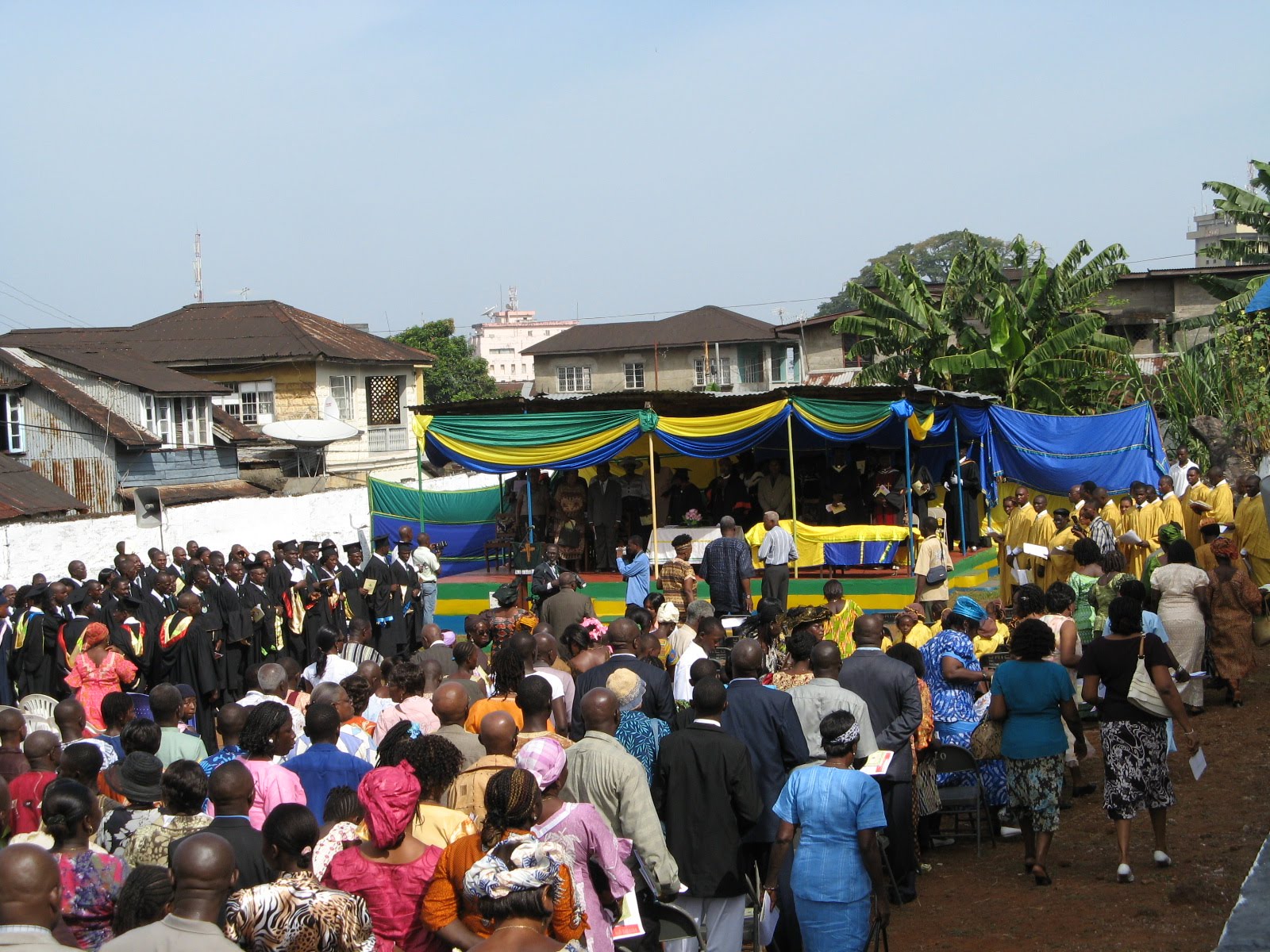
The college celebrates various events during the year including graduation, which takes place in an open space at the front of the college. Students have a uniform to wear for such events, and if graduating, western style academic gowns. A sports day, and football competition are ‘compulsory’ for all and excitement builds up around these events.

The longer we are here, the more we find out about former staff members. On searching the bookshelves in the library, we came across a book by Margaret Baxter, a lecturer here in the 1980s. Thinking that we might find out more about her on the internet we discovered she had been awarded an OBE for her service to the community, in the New Year’s honours list, this year. The college hopes to produce a small publication to celebrate its 35th anniversary. One of the previous lecturers contacted is F Stuart Clark, and he too, we found, has a book in library.
Given the diversity of the courses on offer, the possible impact that those who pass through the college may have on society, is great. With its motto “The light of the world”, it is hoped that through the graduates’ lives transformation of Salonean society will take place by the imparting of peace building knowledge, Christian ministry and social action.

Sunday, September 19, 2010

Helping the Stranger

In our house, any reference to Freetown or Sierra Leone that is heard on the BBC World Service is quickly seized upon, with eager interest. As Sierra Leone is a small country, our antennae for receiving any global reference to it, seems proportionately higher than it would be if living in the UK. How gratifying it is, therefore, to hear good news about Salone and not yet another negative bulletin on matters of health, education or perhaps bad governance. When the Charities Aid Foundation (CAF) announced the World Giving Index 2010, that of all the 153 nations surveyed, Sierra Leone was in 11th position, in its overall willingness to give to others. Australia and New Zealand may have tied for first place, but Sierra Leone was in first place for the countries of the African Continent.

The CAF World Giving Index is shaped by using an average of the same three measures for all of the countries: the proportion of the public who had, in the previous month, given money to charity, who had given time to those in need and thirdly, helped a stranger or person they did not know.

The news came whilst preparing to preach at the annual thanksgiving service for a local benevolent society, which coincided with hearing of the author J.K. Rowling’s £10 million donation towards building and supporting a Multiple Sclerosis clinic in Edinburgh. In addition an email arrived asking us to donate blood at a local emergency hospital. Together they provided more than sufficient reason to study carefully the consequences of the CAF report on how we respond to need, local and global.

No day goes by without two contrasting experiences, being gently asked by individuals, known and unknown, to support them or their family’s need of food and education fees whilst being confronted with another ostentatious building project which shouts, “we have abundant personal wealth”. The habitats of people near to where we live provide physical reminders of the disparities of human existence for Freetonians. And yet in the midst of such day to day reality, Saloneans demonstrate to their African neighbours the capacity for generosity, for grace and for compassion.

Week in and week out, when attending worship services in various churches, we are aware of the emphasis given to numerous collections that punctuate a three hour liturgy. The obscure reasoning used in encouraging the congregations to be generous, causes us to question what is an appropriate response to such demands. The global rise in ‘prosperity preaching’, (the more you give the more you will be personably blessed), has not escaped Salonean churches, and there is no shortage of mega religious events which invariably promote the idea of benefitting significantly, through one’s own personal giving.

The news of the CAF report, coincided with the request for us to donate blood and our subsequent hospital experience has added further to our consideration of giving and receiving. Women arriving at the Mercy Ships Hospital for fistula operations have often travelled considerable distances on foot and by public transport and in doing so have left behind the vital support of their immediate family. For some women, treatment for fistula can only be conducted following an operation to provide a temporary colostomy at Goderich Emergency Hospital. This hospital is a few miles out of Freetown on a wretched road but it has an excellent reputation and its 200 hundred beds are fully occupied. Treatment is free, but in the event of an operation, units of blood of blood have to be donated, before surgery can proceed. We were asked to show up at the hospital and to offer blood in the name of Fatma, who was awaiting a colostomy before undergoing a double fistula operation at Mercy Ships Hospital.

We had decided to try and take other potential donors with us and so Mohamed our nearest neighbour, having been assured he would have enough blood to offer, also joined us. Others quietly declined. Our offer to give blood in the UK has always been declined, on the grounds of either having spent too many years in tropical countries or having a history of malaria. Mercy Ships had assured us that such circumstances were no barrier to donorship in Salone. Our decision to take others was to promote the giving of blood by Saloneans, as a way of helping the stranger.

In the blood laboratory of Goderich Hospital, a large sign dominates one wall. No Money for Blood Transfusion. Please Bring Donors. The staff were intrigued that we should be donating blood for a person we had not met and knew little of, as we waited alongside others donors, with friends and relatives in the hospital. As the age for donating blood is between 16 and 55 years it was decided that we could offer only one paediatric unit each, whilst Mohamed, if he agreed, which he did, could offer an adult unit. A midwife friend, who works in remote areas of the Kailhaun District, on the eastern edge of Sierra Leone, where Liberia and Guinea meet, has often spoken of how difficult it is to obtain blood from relatives of those needing treatment. If no blood is given, patients are sent home to die.

With our blood taken and stored, but without the usual cup of tea and scone, we were encouraged to say “hello” to Fatma and assured her of our prayers and learnt that she was from the north of the country and far from home.

The CAF report gives a clear indication that personal wellbeing influences generosity, more than a person’s wealth. Clearly most Saloneans have very little money, yet their elevated position in the index is largely due to their immense willingness to help the stranger in their midst. This provides us with yet another question, how is it that a small country which was recently torn apart by bloody atrocities, is still able to generate a degree of compassion which is exemplary on the continent of Africa? And this we witness on the streets of Freetown every day.

Wednesday, September 15, 2010

My first visit to Africa

I spent the first two weeks of August 2010 with Peter and Janice in their home in Freetown. We decided that I should write about my stay there, so here I am.

First of all, I need to say that I have never been in Africa before. And I did not have much knowledge or even curiosity about the continent. Since the decision to visit Freetown, I have read and talked a lot about Africa and I am a bit more informed now. I am also enthusiastic in learning and discussing about African countries and people, and this blog I am writing is a way of doing that.

People
I want to start with a dialogue I had with a woman from Freetown while I was still at Heathrow. We were waiting to be called to leave the departure gate and we talked a little bit. She had spent a month in London and was returning home. I asked her what she had missed most and she answered “Warmth.” Then I questioned her if she meant the climate or the people and her answer was “Both”.

After a couple of weeks in Freetown and then back to my hometown (in Porto, Portugal) I cannot say that I miss the hot and rainy season I experienced there, even if I miss the green, but I do miss the warmth of the people from Sierra Leone. I miss the “Hello! How are you?” way of interacting with people, not that we became friends with the people we greeted on the street, even if we eventually could and sometimes did chat a bit, but we had the most pleasant feeling of being in an unthreatening (I owe this adjective to Peter) and welcoming place. And that feeling accompanied me throughout my stay in Freetown, a place where human beings are friendly and also visible to one another, so why not greet each other?

Children are specially warm and affectionate. And they smiled at us, touched us with their hands, played with us, and wanted to see themselves in our photographs.

Once, on a walk with Peter, we passed a man who was listening to the radio, it was the news about the trial of the former president of Liberia, Charles Taylor, at the International Court for Human Rights in the Hague. Peter and I got interested and stood to listen to the news, watching the man’s comments and non verbal reactions. It may sound excessive but I felt that the three of us were communicating, were sharing feelings and ideas, and that happened because that man “allowed” us to stand there, let us share his time and space for some moments and he did not feel invaded or uncomfortable by our presence. For Peter and me it was an enriching moment because we were aware that we and that man were quite different listeners of the same news.

I consider that all I have been describing is warmth, warmth that I miss too. My own experience with people from Freetown is described in this way in the Bradt Guide of Sierra Leone: “politeness and warmth can be found in bucketfuls.” It was also interesting to know that in the World Giving Index 2010 published this September Sierra Leone comes on 11th place, a subject Peter and Janice are going to write about in a future blog.

Of course in talking about the way people connect with each other, I am not talking about relationships. This was something that was not possible in a couple of weeks, however I know that African people tend to have a wider net of relations than Europeans or Americans, life is much more communal and much less ‘on your own’.

For me this communal way of living is something that brings a lot of questions. I admit that I do not understand it very well and I need to learn much more about it. In a way being linked to other people to whom we have obligations and duties can lead to lack of freedom, we have to do what others want us to do and are nor free to choose our own route. It also seems very difficult in the African social world to have a ‘room of one's own’. A lack of freedom and individuality is a feature of social relations.

However there is a dark side of the freedom and individuality I praise so much. I will give just one example. Listening to the news of some catastrophe, where thousands of people die and being told that some bodies have not been reclaimed by anyone, has made me realize how some people are completely alone in the world and how frightening that is. I think that such a situation would not be possible if we lived within a communal society as African societies seem to be.

Religion

I am starting again with a dialogue I had with another woman from Sierra Leone while at Heathrow, this time on the queue to the check in. When I told her I was going to visit some English friends who belonged to the Methodist Church she asked me if I was a Methodist. My answer was “I have no religion.”, to which she replied “That is impossible, it is impossible to live without a religion!”
It might be right that it is impossible to live in Africa and not to be religious. From what I have seen and experienced in Freetown religion seems to pervade people’s lives.

As I am not a religious person I do rarely attend any religious services, just weddings, baptisms and funerals. And the church I know is the Catholic Church. I do not have any particular memory of the few services I have been to.

In Freetown I went to three Sunday services. What struck me most was the joy of the people at church. That joy was shown in the singing, on the dancing, on the way people greeted each other, and their dress. As a newcomer I was asked to present myself, something I have never been asked before at church. I did feel welcomed.

I had the privilege of being in the baptism of Ali, a friend of Peter and Janice. Ali came from a Muslim background and had decided to become a member of the Methodist Church, having worked as the President’s driver for more than ten years. It was a beautiful and moving ceremony.

Ali allowed me to live another special moment in Freetown. Ali was feeling ill and Peter and I paid him a visit. Ali rents two rooms in a house inhabited by other people. The house is located in an area in Freetown like so many others: precarious housing, all cramped, with poor, if any, sanitary conditions. To get to Ali’s place we had to pass several other houses and saw people cooking or doing their washing. We greeted them and did not feel we were seen as intruders. On the way to Ali’s home and at his home I felt the dignity of those people in the midst of poverty. While at Ali’s, Peter asked us to pray and for a few moments I believed God was there. Well, at least love was there and if God is love, as Peter said to me a long time ago, maybe God was too.

Believing in God helps people to cope with their daily life which is so hard in so many ways. Talking to a colleague of Peter I asked him if people in Freetown were happy and he said that they were. I could see this on the streets and people would say to me “Tell God thank you”.

The links between religion, wretchedness and happiness have been discussed for a long time but reading about it is very different from seeing it. And I feel divided between a critical perspective and admiration and even respect. I find difficult not to acknowledge that the way people experience religion may promote acceptance of the unacceptable. At the same time I see the dignity of their lives and I cannot but be in awe of the way they manage to live.

War and Peace
Sierra Leone had experienced a brutal civil war which came to an end in 2002. From my understanding of what I have heard from some people in Freetown, peace is the absolute value. Even if people have to live with the physical and psychological scars of the war, even if people have to be neighbours to someone who had killed or raped a relative or friend, even if people’s homes were destroyed, peace must be maintained because war is far worst.

During the war several people had their limbs amputated. Today there is a football league of amputees. I saw them playing on Lumley beach. They were graceful!

What can I say about the way people in Sierra Leone lead their lives after the war? Does God help them? Is there a Sierra Leone genotype? Have they learnt that peace is priceless? Can we learn with them?

Scenery
Freetown has far exceeded my expectations about its beauty. The sea, the light, the hills, the views, the beaches, the trees – especially the cotton trees – make Freetown a stunning place.

All the walks Peter, Janice and I did together were spectacular. I miss those walks!


Peter and Janice
Peter, Janice and I did some calculations and we realized that we met in 1992 when they were living in Porto. It has been a long and very interesting friendship with a lot of sharing: we share thoughts, books, movies, photographs, recipes…

And of course they have shared their present experience in Freetown with me.

I had the opportunity to attend a Sunday service conducted by Peter and Janice at Mercy Ships, where they meet with other internationalists from different denominations, once a month, for a service. On that Sunday it was Peter and Janice’s time to prepare the service. And they prepared it! They dramatized a dialogue between Jesus and the apostle Peter and they were really good. What struck me most was their involvement and preparation even for a simple ceremony in a simple place with not many people. I see the same involvement and preparation in their blog too.

The three of us had some interesting discussions about Africa, Sierra Leone, the civil war in Sierra Leone, the meaning and types of marriage in Africa, the meaning of what it is to be a “person” in African culture. We watched some movies about Africa, read bits of books and articles. And I know we will continue to do all this through their blog, emails, texts, other meetings – that is a feature of our friendship. It is a demanding feature, I am aware of that, that enriches and challenges me and, I hope, them too.

And all this wrapped up with Janice’s cookies, BBC World Service and some good laughs!

For all this and much more I feel deeply privileged and grateful.

Rita Estrada, Portugal, September 2010

Sunday, September 5, 2010

A Tale of Three Cities: Freetown, Maputo and Accra and the price of bread!

On a day when Janice arrived home in state of delight, having found wholemeal flour in a local supermarket, the rioting over price increases for bread continued in Maputo, for the third day. The Mozambique government, having held an emergency session, appealed for calm, as reports of seven people killed and 280 injured in the protests.The army were then called in to clean the city of barricades and restore order and public security.


The rioting had been prompted principally by increase in the price of bread, in one of the world's poorest country, which has yet to fully recover from protracted colonial and civil wars, and with a current unemployment rate of 54%. The government had imposed a price rise of 30%, for the cost of bread, part of the staple diet for Mozambicans, who earn on average about US$37 / £22 a month. The fall of the local currency, the Metical, by approx 43% in one year against South Africa’s Rand, its principle trading partner, also exacerbated the plight of the urban poor. Added to this was the recent increase in both the cost of electricity and water.

Here in Freetown during the last month we have read in The New African and The Africa
Report
of Mozambique’s economic
success with growth rates of above 6%-7% for three consecutive years, a figure above the 5% threshold considered necessary to make real improvements in standards of living. Foreign investment in Mozambique has increased by approximately 44% between 2007 and 2009 but nevertheless, 40% of the nation’s budget is dependent upon foreign aid, as the country remains 175th (close to the bottom) of the United Nations Human Development Index.

It would appear that, following the outbreak of the global economic crisis in 2008, the attention that was then being given to the alarming increase of the cost of food on the world markets, had been largely ignored, as multi-national finance houses and western governments were desperate to establish their own economic survival. That is, until the fires which scorched Russia and much of its grain harvest caused President Putin to ban the export of wheat which, in turn, reduced the global supply of wheat by 8%. This has raised the profile of the talks called for by the African Green Revolution Forum held in Accra this past week on the production of food on the continent of Africa.

“This is the time”, Kofi Annan, former Secretary General of the United Nations, insisted, “to invest in the thousands of small scale farmers that exist in all countries”. The appeal coincided with announcement of Standard Bank Africa’s support of 100 million $US for 750,000 small scale growers of cash crops, including cocoa and cashew nuts in Ghana, Mozambique, Tanzania and Uganda. The African continent possesses 60% of the world’s land available for agricultural development and over the last decade food production in Africa in general has shown significant improvements in a number of countries, with the exception being those regions where conflict still persists. But the rise in level of food production in Africa has not protected those on the lowest incomes, who do not have the money to buy food, or have access to land to grow what they need to eat. Across the continent the increase in national populations and the rate of urbanisation have both contributed to the phenomena of poverty, made even worse by a fall in the world’s grain supply.

In Sierra Leone, we have noticed and have commented upon the rise of the cost of living caused by the introduction of a sales tax at the beginning of the year. Now in September, we are reaching the end (if the predictions are correct) of the heaviest rain-falls for the year , when the effect of the wet season creates food scarcity and increases costs. People in Freetown are never heard to complain about excess rainfall, knowing how much they will need in the dry season and those with land have been planting in earnest for while. Living as we do on a compound with gardening land available, we ought to be growing wheat. However in the wettest part of West Africa that is not an option and we shall continue to have to buy bread locally made from imported grain. But with the departure of the goat herd, we have planted sweet potatoes and cassava, for their leaves as well as their roots, spring onions, pineapple, okra, a variety of fruit trees including bananas, pawpaws, oranges, lemons and guava, as well as nursery of herbs. There are still various seeds to go in, such as corn and beans, and as we sit on our veranda at dusk, and wait for the owls to come out, we call to mind the words, “ Give bread to those who are hungry and a hunger for justice to those who are fed”.

Sunday, August 22, 2010

The Three Rs: Ridin, Raitin and Riligohn

Many years ago, we listened to the first hand experience of Inderjit Bhogal, who on entering a book shop would regularly ask “Where are the black writers?”. Inderjit is a Ugandan born British Asian, who grew up in a Sikh household and as a young man became not only a Christian, but also a Methodist minister. He had just completed his year of office as the Methodist Church in Britain’s first black president when he told us of his shopping experience. In a store that sold books and stationery, a sales assistant was clearly puzzled by Inderjit’s question and proceeded to display the variety of black felt tipped pens that were available.
Who are black writers? African writers? religious writers? These are questions with many facets. They have been interpreted differently throughout history, and the various eras of socio-political and literary change have shaped their development. Reading, writing and religion are complex issues.

Graham Greene, the British author, prepared the novel, The Heart of the Matter, when he was based in Sierra Leone and working for the Secret Intelligence Service during World War II. Set in Salone, the story is not just about failure, but about the price we all pay for our individualism and the impossibility of truly understanding another person. As in many of Greene's earlier works the story deals with not just the tension of the individual and the state, but also the conflict of the individual and the church. Greene was apparently annoyed by being referred to as a Catholic novelist, insisting that as a novelist he was also a Roman Catholic.

In an another era, Thomas Mofolo, from Lesotho, had already
written a novel, The Fallen Angel before 1925, when he produced the work for which he is best known, Chaka, based on the life of the legendary Zulu, King Shaka. The book is considered one of earliest literary expressions of African Theology, and by a lay theologian. It is highly likely that Steve Biko, as the leader of the Black Consciousness Movement in South Africa would have been aware and influenced by the writings of Thomas Mofolo, when in the late 1960’s Biko produced a collection of his own writings under the title I write what I like.

The Salonean writer, Olufemi Terry, said " I write what I like to read", shortly after receiving the 2010 Caine Prize (the African Booker ) for short stories. His award winning story, “Stick fighting days”, is based on ritualised combat conducted by young boys, who inhale solvents to comatose themselves against poverty in Nairobi. As with numerous other acknowledgments of artistic and literary accomplishments, the award ceremony for this African achievement, was held in Europe, in the Bodelian library in Oxford, England. The shortlist for the prize also included, How shall we kill the Bishop? by the Kenyan Lily Mabura, whose quizzical title explores the nature of religious life for members of a catholic community, endeavouring to serve God during the country’s transition towards independence. Both Terry and Mabura’s stories display features to be found in the highly acclaimed book Say you’re one of them by Uwem Akpan, a Nigerian Jesuit priest, whose short stories are not for those who want a romanticised notion of childhood in Africa .

In Freetown, the most available novel by an African writer, is that of the Nigerian, Chinua Achebe’s first novel Things fall apart, which was published in 1958. It is the story of a traditional village "big man" Okonkwo, and his downfall. The book has been translated into some 50 languages but not Krio, and as a secondary school text in Salone, it is for sale in photocopied editions on numerous stalls on Freetown’s streets. Other than the bible, there is very little literature available in Krio. It is not surprising then, that those entering the world of literacy want to be able to read and write in English. Bank forms, medical prescriptions and children’s schoolwork are all in English. Preparation for literacy classes are now underway for some 60 or more potential adult learners, following the training of fourteen adult literacy facilitators. It is not I write what I like, but I read what I need to know. Entering the world of literacy, for this particular group, who are HIV+, will enable them to do more than sign their name. Literacy safeguards their health, wellbeing and their finances against possible exploitation. Becoming literate empowers a person to not only rid and rait but to have access to the writings of their riligohn.